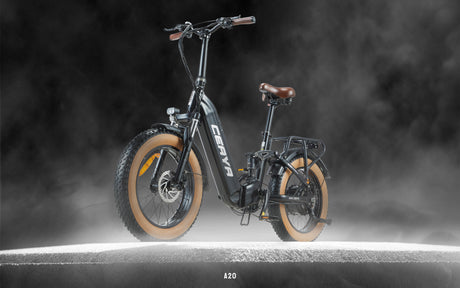
If you've been shopping for a two‑wheeled electric vehicle, you've probably come across terms like CEAYA Ebike, Electric Mountain bike, and even "fat bike" – but you might also have seen bikes that claim speeds of 40+ mph. This often leads to confusion.
A common question we hear at CEAYA Electric Bike is: "Why does your bike top out around 15.5 mph(25km/h), while my friend's 'bike' can hit 41 mph?"
The short answer: your friend is likely riding an electric motorcycle, not an e-BIKE. And that distinction matters – for safety, legality, and the riding experience.
What Exactly Is an E‑Bike?
An ebike (electric bicycle) is a bicycle with an integrated electric motor that provides pedal assistance. It retains fully functional pedals. But the exact definition depends on where you live – the US and EU have different regulatory frameworks.
US Standards
In the U.S., e-Bikes are classified into three classes:
|
Class |
Motor Power |
Top Speed (assisted) |
Throttle |
License/Registration |
|
Class 1 |
≤ 750W |
20 mph |
No (pedal‑assist only) |
Not required |
|
Class 2 |
≤ 750W |
20 mph |
Yes (up to 20 mph) |
Not required |
|
Class 3 |
≤ 750W |
28 mph |
No (pedal‑assist only) |
Not required |
Ebikes are classified as non‑motorized vehicles and can be ridden on bike lanes, multi-use paths, and even sidewalks where local rules permit -no license, registration, or insurance is required.
EU Standards
In the European Union, the regulatory framework is different. The key standard is EN 15194, which defines Electrically Power Assisted Cycles (EPACs) - Ebikes that qualify for bicycle treatment under EU law.
To be classified as an EPAC (and thus treated as a regular bicycle), an e-bike must meet these requirements:
- Motor power: Maximum continuous rated power ≤ 250W (peak output may briefly exceed this, but continuous rated power must not)
- Speed cutoff: Motor assistance must cut off at 25 km/h (15.5 mph)
- Pedal-assist only: Throttle‑controlled motors are prohibited - the motor only assists when the rider is pedalling. The only exception is a "walk-assist" mode limited to 6 km/h
- Safety certification: Must comply with EN 15194:2017+A1:2024, which includes enhanced battery safety requirements (thermal management, overcharge protection, IP54 minimum ingress protection) and electromagnetic compatibility testing
No license, registration, or insurance is required for EPACs in the EU. They are legally equivalent to standard bicycles.
EU L-Category Vehicles: Beyond EPAC
The EU also has a category system for higher-performance electric two-wheelers, defined under Regulation 168/2013:
|
Category |
Name |
Top Speed |
Motor Power |
Requirements |
|
L1e‑A |
"Powered Cycle" |
≤ 25 km/h |
≤ 1,000W |
Requires type-approval, registration, and insurance |
|
L1e‑B |
"Moped" (includes Speed Pedelecs) |
25-45 km/h |
1,000W-4,000W |
Requires license, registration, insurance, and helmet |
|
L3e |
Electric Motorcycle |
Unrestricted |
Unrestricted |
Requires motorcycle license (A1, A2, or A) and full registration |
Important: A pedelec with 750W motor falls under L1e- A and requires registration and insurance ,it is not treated as a bicycle. Similarly, Speed Pedelecs (S-Pedelecs) that assist up to 45 km/h are classified as L1e‑B mopeds and require a license plate, insurance, and a motorcycle helmet.
What Is an Electric Motorcycle?
An electric motorcycle (e-motorcycle) is, simply, a motorcycle powered by an electric drivetrain. It shares the same frame, suspension, braking, and safety standards as a gasoline motorcycle, but replaces the engine with a high-power motor (often 4kW to over 10kW).
These machines can exceed 50 mph, some even topping 100 mph. They are motor vehicles - they require a motorcycle license, registration, insurance, and a license plate. You cannot ride them on bike paths; they belong on roads, just like traditional motorcycles.
In the EU, electric motorcycles fall under category L3e and require a motorcycle license (A1, A2, or A depending on power output). In the US, they are generally classified as Class 4 e-bikes (or simply as motorcycles/mopeds) and require corresponding documentation, registration, and insurance.
A classic example is the Surron brand's dirt bike model Light Bee, which looks like a bicycle but reaches 50 mph .It's an electric motorcycle, not an e-bike. In the EU, homologated Surron fall under categories like L1e (mopeds limited to 45 km/h) or L3e (motorcycles).
Side by Side Comparison: E-Bike vs Electric Motorcycle
To help you decide, here is a comprehensive comparison covering every important factor – including both US and EU classifications:
|
Feature |
E-Bike (US Class 1-3) |
E-Bike (EU EPAC) |
Electric Motorcycle (US Class 4 / EU L3e) |
|
Legal classification |
Non‑motorized vehicle |
Non‑motorized vehicle (EPAC) |
Motor vehicle |
|
Max motor power |
≤ 750W |
≤ 250W continuous |
Unrestricted (typically 4kW+) |
|
Top speed (assisted) |
20–28 mph |
25 km/h (15.5 mph) |
30+ mph, often >70 mph |
|
Pedals |
Required and functional |
Required and functional |
None (or decorative) |
|
Throttle allowed? |
Class 2 only (up to 20 mph) |
No (pedal‑assist only) |
Yes |
|
License required |
No |
No |
Yes (motorcycle license) |
|
Registration & plates |
No |
No |
Yes |
|
Insurance required |
No |
No |
Yes (mandatory) |
|
Where to ride |
Bike lanes, paths, sidewalks |
Bike lanes, paths, cycle tracks |
Public roads only |
|
Frame & weight |
Lightweight (40-80 lbs) |
Lightweight (40-80 lbs) |
Heavy (200+ lbs), motorcycle‑grade |
|
Suspension & brakes |
Bicycle-grade |
Bicycle-grade |
Motorcycle-grade, high-performance |
|
Battery capacity |
36V-52V, 10-20Ah |
36V-48V, 10-20Ah |
72V+, 30+ Ah (3-10 kWh) |
|
Range (real‑world) |
20-60 miles |
20-60 miles |
40-100 miles (throttle only) |
|
Charging time |
3-6 hours |
3-6 hours |
4-10 hours (fast-charge optional) |
|
Maintenance |
Low-chains, tires, brake pads |
Low-chains, tires, brake pads |
Higher -similar to a motorcycle |
|
Purchase price |
$1,500-$3,000 |
€1,500 - €3,000 |
$7,000-$30,000+ |
|
Passenger capacity |
Typically 1 rider |
Typically 1 rider |
Can carry passenger |
|
Helmet required? |
Varies by state |
Varies by country (recommended) |
Mandatory in most jurisdictions |
|
Certification standard |
varies by state |
EN 15194 (mandatory as of 2026) |
UNECE L3e |
EU vs US: Key Differences You Should Know
If you're riding in Europe versus America, the rules are not the same:
|
Aspect |
US |
EU |
|
Max power |
750W |
250W (continuous) for EPAC |
|
Max speed |
20-28 mph |
25 km/h (15.5 mph) for EPAC |
|
Throttle |
Allowed on Class 2 |
Prohibited on EPAC |
|
Higher‑power options |
Class 3 (28 mph, no throttle) |
L1e‑A (25 km/h, 1kW, requires registration) |
|
Speed Pedelec |
Not separately classified |
L1e‑B (45 km/h, 4kW, requires license & insurance) |
What this means for you: A bike that's perfectly legal as a Class 2 e‑bike in the US (750W, throttle, 20 mph) would not qualify as an EPAC in the EU – it would fall into L1e‑A and require registration and insurance. Always check local regulations before purchasing or riding.
Why This Distinction Matters
1. Safety
E-bikes are built to a bicycle standard – the frame, brakes, tires, and electrical components are all rated for their respective speed limits (28 mph in the US, 25 km/h in the EU). Pushing an e-bike to 40+ mph through modifications would require completely replacing the motor, controller, display, battery management system, and even reinforcing the frame. Even then, the brakes and suspension would still be inadequate. This is extremely dangerous,like putting a race car engine in a family sedan.
CEAYA strongly advises against modifying any of its e-bikes to exceed their designed limits. We sell only standard replacement parts; we don't provide aftermarket components for such unsafe upgrades.
2. Legal Consequences
In the US, any electric two-wheeler that can exceed 20 mph solely by motor power is not considered an e-bike under federal law. In the EU, exceeding 250W or 25 km/h pushes the vehicle into L-category, requiring type-approval, registration, and insurance. If you ride an unregistered electric motorcycle on a bike path without a license or insurance, you risk heavy fines, impoundment, and liability in case of an accident.
3. Intended Use
E-bikes are perfect for daily commutes, fitness, leisure rides, and light off-road trails. Electric motorcycles are built for high speed commuting, long distance touring, and serious off-road enduro ,they are recreational vehicles, not fitness tools.
CEAYA's E-Bike Lineup: A20PRO and M500 ,True E-Bikes, Not Motorcycles
Let's introduce two of our most popular models both are genuine e-bikes that comply with legal limits (US Class 2/3 and EU EPAC standards) and offer outstanding performance for their intended purpose.
CEAYA A20PRO : The Versatile E-Bike

- Motor: 1000W peak rear hub motor
- Battery: 48V 20Ah (removable)
- Range: Up to 70-90 km (56 miles) in pedal assist mode
- Torque: 75 Nm,enough for moderate hills
- Tires: 20" x 4.0" fat tires (yes, it's a fat bike!)
- Suspension: Front and rear double suspension
- Net Weight: 35 kg (66 lbs)
- Led headlight & Tailight,perfect for city commuters ride at night
The A20PRO is an excellent choice for urban riders who want a compact, nimble e-bike that can also handle light gravel or snow thanks to its fat tires.
CEAYA M500 ,The Ultimate Electric Mountain Bike

- Motor: 1000W peak geared hub motor
- Battery: 48V 20Ah LG cells
- Range: 80–100 km (50–62 miles) in PAS mode
- Torque sensor:provides natural, responsive pedal assistance
- Tires: 26" x 4.0" fat tires :outstanding traction on mud, sand, or snow
- Suspension: Adjustable front and rear suspension
- Max load: 180 kg (397 lbs)
- Frame: High strength aluminum alloy
The M500 is a true Electric Mountain bike that can tackle rough trails while remaining legally compliant. With its fat tires, it also doubles as an all season fat bike for winter rides. Many riders consider the M500 a top contender for 2026 Best e bike in the mid price category.
Both models are designed to comply with US Class 2/3 standards and EU EPAC requirements ,they require no license, registration, or insurance in most jurisdictions. They are built to the highest safety standards and deliver plenty of power for the vast majority of riders. And yes, they both have functional pedals ,you can ride them like a regular bicycle if you want a workout!
How to Tell an E Bike from an Electric Motorcycle -A Quick Checklist
If you're inspecting a potential purchase, use this simple rule of thumb:
- Look for pedals - if they're missing or useless, it's not an e‑bike.
- Check the top speed - in the US, anything above 28 mph under motor power is a motorcycle. In the EU, anything above 25 km/h (15.5 mph) under motor power is at least an L-category vehicle.
- Read the motor label - US: >750W = not an e-bike. EU: >250W continuous = not an EPAC.
- Ask about licensing - if the seller says you need a motorcycle license or registration, it's a motorcycle (or L-category vehicle).
- Weight - if it's over 100 lbs and feels like a motorcycle, it probably is one.
Summary,Which One Should You Choose?
Choose an E-Bike if:
- You want to ride on bike paths, trails, or cycle tracks.
- You don't want to deal with licenses, registration, or insurance.
- You enjoy pedaling and want light exercise.
- You need a practical, affordable, and low‑maintenance vehicle for daily trips.
- You're looking at CEAYA A20PRO or CEAYA M500 – both are excellent, safe, and legal options in both the US and EU.
Choose an Electric Motorcycle (or EU L-category vehicle) if:
- You need highway speeds (above 28 mph in the US, or above 25 km/h in the EU) regularly.
- You're willing to get a motorcycle license, register the vehicle, and buy insurance.
- You plan to ride exclusively on public roads.
- You're prepared for higher purchase and maintenance costs.
- You want a high‑performance machine for off‑road enduro or long‑distance touring.
Final Thought
The 41 Mph "bike" is probably an electric motorcycle and that's fine, but it's not the same as a CEAYA Ebike. Don't compare apples to oranges. Our e-bikes are designed for safe, legal, and enjoyable riding ,not to break speed records.Speed isn't everything; peace of mind, legality, and fitness are just as important.
And remember: e-bike laws vary significantly between the US and EU. A 750W throttle equipped bike that's legal in the US may require registration and insurance in Europe. Always check your local regulations before purchasing.
Ride smart, ride safe, and enjoy every mile with CEAYA.
Disclaimer:
The above information about the specific classification standards, test specifications and relevant laws and regulations of electric bicycles and electric motorcycles are all derived from online search results (as of July 4, 2026) and are for reference only. Actual regulations and standards may vary from country to country or change over time; refer to your local jurisdiction's officially published standards.